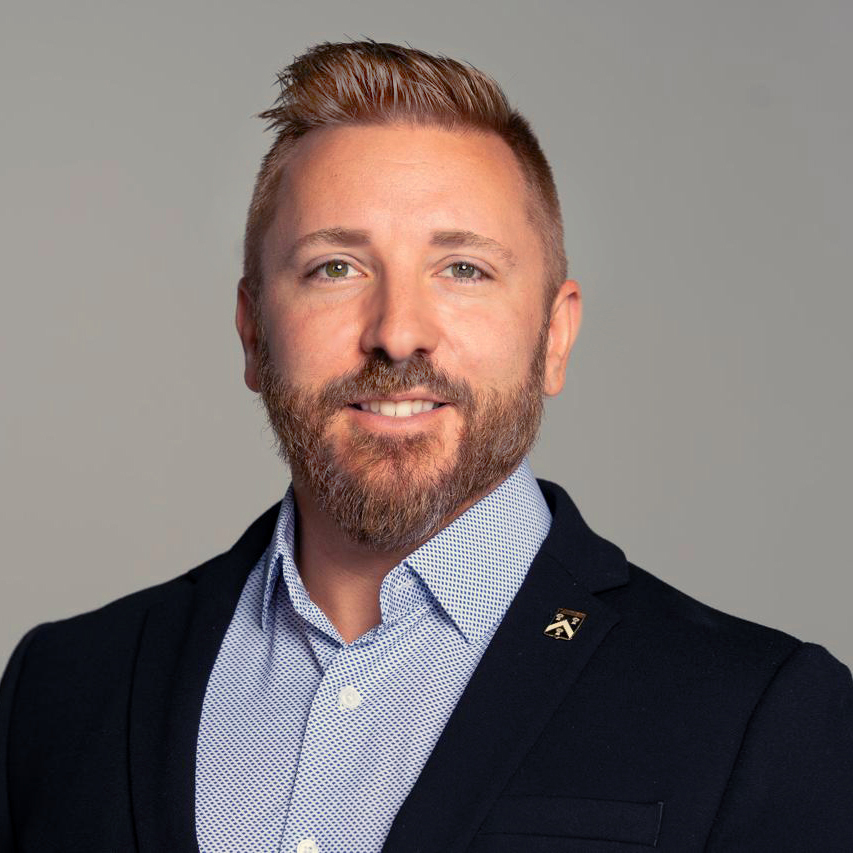

Process Management for Business Growth: Matt Kovacs on Building a Business That Lasts
Building a successful company takes more than a great idea or a talented team. Process management for business growth becomes increasingly important as a company expands, responsibilities multiply, and the owner can no longer be involved in every decision.
But there is another side to that challenge. Put too many processes in place, and a business can become rigid. Create too few, and the owner and team can spend their days reacting instead of executing a strategy.
For Matt Kovacs, President of Blaze PR, finding the balance between structure and flexibility has been an important part of building and leading the Southern California public relations agency.
Matt joined us on Business Owners Tell All: What It Takes to talk about the processes behind Blaze PR, how his team stays aligned in an unpredictable industry, why employees need the confidence to make decisions without constantly seeking approval, and why successful processes ultimately have to connect back to the goals of the business.
His perspective provides an important reminder for business owners: process should support strategy, not become the strategy.
From Working With Brands to Leading Blaze PR
Matt has spent more than two decades in public relations, but his career began on the brand side.
He worked with Levi’s and later Lids, where he experienced the company’s growth early in its journey. He then worked at another agency, gaining experience with entrepreneurial brands before bringing those lessons into Blaze PR.
When building Blaze, Matt wanted to approach the traditional agency relationship differently.
Instead of creating a business where clients believed everything depended on one person, he wanted Blaze PR to operate as a team and for clients to experience the agency as a genuine partner.
That philosophy remains evident in the business today.
Matt shared that a core group of Blaze team members has worked together for approximately five years, something he noted is significant in the PR industry. The stability has allowed people to understand one another’s strengths and weaknesses and ultimately work together more effectively for clients.
The agency’s workplace culture has also received recognition from organizations including PRWeek, the Pacific Coast Business Times, and the Los Angeles Business Journal.
But creating that type of team requires more than hiring talented people. It requires processes that give those people enough structure to work together while still giving them room to think.
Creating Structure in an Industry That Changes Every Day
PR doesn’t operate in a predictable environment.
Breaking news can suddenly change what matters. A new opportunity can appear unexpectedly. Events, launches, media cycles, client priorities, influencers, partnerships, and emerging technology can all change the day’s plan.
As Matt put it during our conversation, “Every day’s different.”
That makes process management particularly interesting.
Blaze PR creates consistency through systems such as Monday and Thursday status calls, sometimes lasting only 15 minutes. Those meetings provide opportunities for the team to touch base, reset, and ensure campaigns and timelines continue moving forward.
But Matt doesn’t see process as simply assigning tasks and checking them off.
Interpersonal communication is part of the system.
Team members need to understand what is working, how people are doing, what a client may be experiencing, and how those circumstances affect the relationship.
That distinction matters for any company implementing process management for business growth. A process can tell someone what needs to happen next. A strong operating system also helps people understand why it matters and gives them enough context to make good decisions when reality doesn’t follow the process exactly.
Repeatable Processes Should Still Leave Room to Adapt
Every business has certain activities that can and should become repeatable.
In PR, Matt describes these as the tried and true parts of the industry’s playbook: press releases, press kits, media training, and other foundational activities.
But the playbook cannot become an excuse to stop evolving.
Artificial intelligence provides a perfect example.
Matt recalled how quickly predictions emerged that AI could replace many traditional PR functions. If AI could write a press release, generate a pitch, and potentially interact with AI generated media, where would that leave PR professionals?
Reality has proven more complicated.
AI and large language models have instead created new considerations around how information is discovered and consumed. Matt explained that the way LLMs crawl and learn from information, including press releases, is creating reasons for PR professionals to reconsider how content is formatted and distributed.
In other words, the process didn’t disappear.
The process evolved.
And Matt believes agencies have a responsibility to evolve with it.
One of the most memorable observations from our conversation was:
“The kiss of death of any agency is, ‘Well, you didn’t do anything new.'”
For Blaze PR, maintaining relevance means continually asking what the team can do today, this week, and next to create opportunities rather than simply waiting for opportunities to appear.
Strategy Starts With Knowing What You’re Trying to Accomplish
One of the easiest mistakes businesses make is confusing activity with strategy.
A team can be extraordinarily busy without necessarily moving the company toward its goals.
Matt’s approach to client strategy begins with a deceptively simple question:
What do you actually want PR to accomplish?
Is the company looking for investment?
Does the owner eventually want to sell the business?
Is the priority brand building?
Are they trying to increase sales?
Are they preparing for a retail launch?
Once Blaze understands the desired outcome, the team can build the strategy around it.
They calendar important moments such as launches, trade shows, seasonal opportunities, retail initiatives, and other events. Campaigns can then be designed around the moments that actually matter to the client’s business.
Matt described the objective as making sure they aren’t simply “doing PR for PR’s sake.”
That principle extends well beyond public relations.
Before creating another workflow, meeting, report, policy, or system, business owners should be asking:
What business objective is this process helping us accomplish?
If there isn’t a good answer, the process may simply be creating more work.
Process Management for Business Growth Requires Team Ownership
One of the strongest themes throughout our conversation was ownership.
Matt doesn’t believe every idea about how Blaze operates should come from him.
As new employees join the company, they bring different experiences from previous agencies, schools, industries, locations, and even different parts of the world. Matt sees value in incorporating those perspectives rather than requiring everyone to conform to the way things have always been done.
Even something as simple as team building can be reconsidered.
Maybe another lunch and learn isn’t what employees need. Maybe the traditional happy hour feels dated. Perhaps there is something else the team would actually value.
Matt summarized the philosophy simply:
“It’s not my world, it’s all our worlds.”
That philosophy helps explain why process management and company culture cannot be completely separated.
If employees believe processes are simply instructions handed down from leadership, they may comply with them.
If they understand the reasoning behind those processes and have an opportunity to improve them, they are far more likely to take ownership of the result.
Matt referenced a Mike Tomlin quote that captures that distinction:
“We want participants, not hostages.”
People should be part of the business because they want to contribute to it, and Matt wants his team to feel that their decisions matter.
Building a Business Where Everything Doesn’t Depend on the Owner
For many growing businesses, this is the real test of process.
What happens when the owner isn’t there?
Matt says the longevity of Blaze’s core team has helped create something incredibly valuable: confidence.
His team understands the clients. They understand what Blaze is trying to accomplish. They have worked together long enough to develop what Matt described as almost a “sixth sense.”
As a result, Matt doesn’t have to approve every decision.
“I don’t need to sign off on everything.”
That sentence represents a significant transition for a business owner.
Delegation isn’t simply giving someone a task. Effective delegation means developing enough context, judgment, accountability, and trust that someone can make the decision without waiting for the owner.
Matt teaches his team to think differently about their clients as well.
Instead of asking only whether they completed the PR task, he encourages them to think:
If this were your business, how would you want it treated?
That shifts the employee’s perspective from task completion to business impact.
“Coverage Is Transactional”
Perhaps the most memorable moment of our conversation came when Matt talked about how his team evaluates results.
“Coverage is transactional.”
Getting a piece of media coverage tomorrow doesn’t mean the work is finished.
The business continues.
PR isn’t always directly transactional in the way advertising can be. A company may spend a specific amount on an advertisement, measure the sales generated from it, and calculate the immediate return.
PR can work differently.
Matt sees it as brand building, validation, share of voice, visibility, and creating a longer term connection between a company and its audience.
The question therefore becomes bigger than:
Did we get the coverage?
It becomes:
How did what we did help affect the business?
That distinction is just as relevant outside PR.
Processes become dangerous when completing the process becomes the goal.
The checklist gets completed.
The report gets submitted.
The meeting happens.
The task gets closed.
But did anything meaningful improve?
Strong process management for business growth keeps the outcome visible so the process never becomes more important than the purpose it was designed to serve.
What Does It Really Take to Be a Business Owner?
We close every episode of Business Owners Tell All: What It Takes with the same question:
After everything you’ve learned, what does it really take to be a business owner?
Matt’s answer wasn’t about sophisticated strategy, rapid scaling, or finding the next competitive advantage.
It was about something much simpler.
“I think it’s all the little things.”
Remember people’s names.
Treat people the way you would want to be treated.
Remember someone’s birthday.
Know the names of your employees’ pets.
Be direct.
Do the work.
Don’t spend your time searching for shortcuts.
Matt credits some of that philosophy to his father, who was a third grade teacher and instilled principles such as the Golden Rule in him from an early age.
Those lessons have remained relevant throughout Matt’s career.
“If you look for angles and edges, and you’re always trying to find the quick fix, it’s not going to work.”
In an episode centered around processes and strategy, that may be one of the most important lessons.
Systems matter.
Strategy matters.
Technology matters.
But ultimately, businesses are still built by people working with other people.
Process Should Make the Business Stronger
Matt’s experience at Blaze PR illustrates an important distinction between having processes and building a process driven organization.
The goal isn’t to document everything until people stop thinking.
It’s to create enough structure that people know where they’re going, understand what matters, and have the confidence to make good decisions along the way.
That means establishing consistent communication while remaining adaptable.
It means tying activity to business objectives.
It means giving employees ownership rather than requiring every decision to flow through the owner.
And it means continually questioning whether the processes that worked yesterday are still helping the company accomplish what it needs to accomplish tomorrow.
Perhaps most importantly, it means remembering that even the best strategy still depends on relationships.
As Matt put it when describing the relationship between an agency and its clients:
“You’re in the foxhole together.”
That sense of partnership, supported by the right strategy, processes, and people, is ultimately what helps turn a collection of individual activities into a business built to last.
Listen to the full conversation with Matt Kovacs, President of Blaze PR, on Business Owners Tell All: What It Takes for more on building processes, empowering your team, adapting your strategy, and creating a business that doesn’t depend on the owner for every decision.